A breast cancer diagnosis can raise many questions, especially about the stage of the disease. Breast cancer staging helps doctors understand the extent of cancer, whether it has spread to nearby lymph nodes, and whether it has reached other parts of the body. This information plays an important role in planning treatment.
Table of Contents 15 sections
- What Do Breast Cancer Stages Mean?
- Stage 0 Breast Cancer
- Breast Cancer Stage 1
- Breast Cancer Stage 2
- Breast Cancer Stage 3
- Breast Cancer Stage 4
- Early Stage Breast Cancer vs Advanced Breast Cancer
- How Is Breast Cancer Staged?
- Treatment Can Differ Within the Same Stage
- Breast Cancer Surgery and the Role of a Breast Cancer Surgeon
- Conclusion
Breast cancer is generally classified from Stage 0 to Stage 4. Stage 0 refers to non-invasive disease, while Stage 4 means the cancer has spread to distant organs. Understanding these stages can help patients and families make sense of medical discussions.
What Do Breast Cancer Stages Mean?
Breast cancer staging describes how much cancer is present and where it is located. Doctors consider tumour size, lymph node involvement, distant spread, and biological characteristics such as hormone receptor and HER2 status.
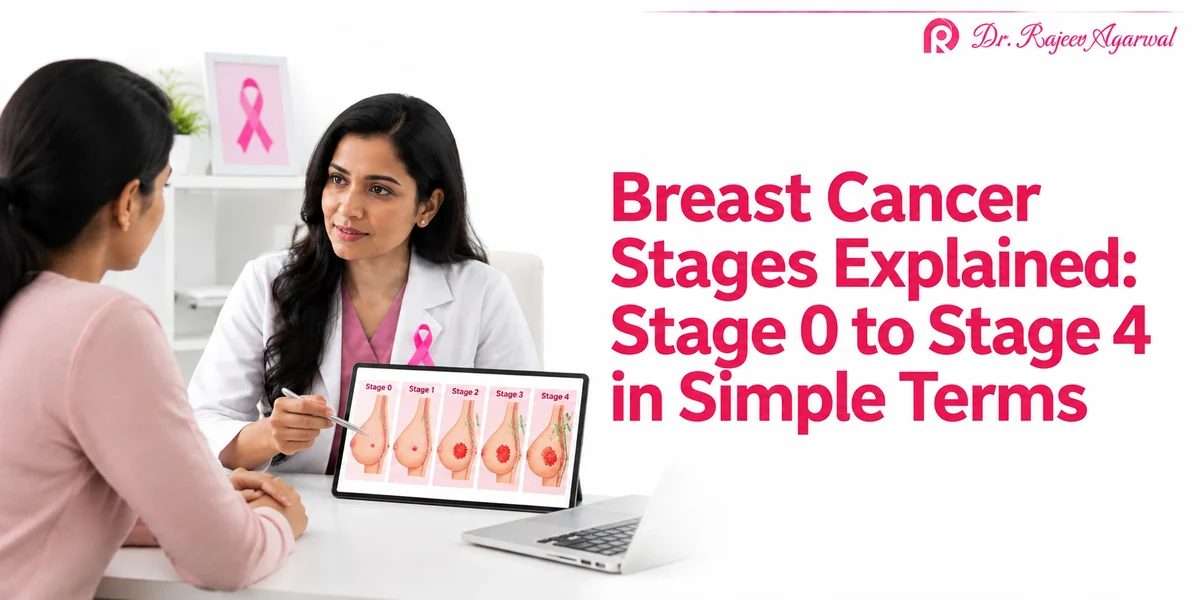
The stages are broadly divided into:
- Stage 0: Non-invasive breast cancer
- Stage 1: Small, localized invasive breast cancer
- Stage 2: Larger tumours or limited nearby lymph node involvement
- Stage 3: Locally advanced breast cancer
- Stage 4: Cancer that has spread to distant organs
The stage should always be interpreted alongside biopsy results, imaging reports, tumour biology, and overall health.
Stage 0 Breast Cancer
Stage 0 is generally considered the earliest form of breast cancer. At this stage, abnormal cells remain within the ducts or lobules and have not invaded surrounding breast tissue.
A common example is ductal carcinoma in situ (DCIS). Since these cells have not invaded nearby tissue, Stage 0 is also called non-invasive breast cancer.
Treatment may include surgery, radiation therapy, or hormone therapy in selected cases. The primary goal is to prevent the abnormal cells from progressing to invasive cancer.
Breast Cancer Stage 1
Breast cancer Stage 1 is an early stage of invasive breast cancer. The cancer has started invading surrounding breast tissue but remains relatively limited.
Stage 1 is commonly divided into Stage 1A and Stage 1B based on tumour characteristics and lymph node involvement. The tumour is generally small, although the exact classification depends on the clinical findings.
Treatment may involve surgery followed by additional therapies when needed. Depending on the cancer’s characteristics, treatment can include radiation therapy, hormone therapy, chemotherapy, or targeted therapy.
Many patients with early-stage breast cancer receive a combination of local and systemic treatments. The exact approach depends on the individual diagnosis rather than the stage alone.
Breast Cancer Stage 2
Breast cancer Stage 2 generally describes cancer that is larger than some Stage 1 tumours or has spread to a limited number of nearby lymph nodes.
Stage 2 is commonly divided into Stage 2A and Stage 2B. The classification depends on tumour size and lymph node involvement.
Treatment may include surgery, systemic therapy and radiation therapy. In some cases, medicines are given before surgery to reduce tumour size or treat cancer cells throughout the body. This is known as neoadjuvant treatment.
Surgical options may include breast-conserving surgery or mastectomy, both of which are part of breast cancer treatment in Gurgaon. The decision depends on tumour size, location, breast size and other individual factors.
Breast Cancer Stage 3
Breast cancer Stage 3 is considered locally advanced breast cancer. The cancer may be larger or involve more extensive nearby lymph nodes or structures around the breast.
Stage 3 does not necessarily mean that cancer has spread to distant organs. This distinguishes locally advanced disease from Stage 4 breast cancer.
Treatment often involves multiple approaches. Systemic therapy may be given before surgery, followed by surgery and radiation therapy. Additional treatment may be recommended according to the tumour’s biological characteristics and response to therapy.
A multidisciplinary team of breast surgeons, medical oncologists, radiation oncologists, radiologists and pathologists may work together to develop the treatment plan.
Breast Cancer Stage 4
Breast cancer Stage 4, also known as metastatic breast cancer, occurs when cancer has spread from the breast to distant parts of the body.
Common sites of spread include the bones, liver, lungs and brain, although metastasis can occur elsewhere.
Unlike Stages 0–3, Stage 4 breast cancer is not limited to the breast and nearby tissues. Treatment generally focuses on controlling the disease, slowing its progression, managing symptoms and maintaining quality of life.
Depending on the cancer subtype, treatment may include hormone therapy, targeted therapy, chemotherapy, immunotherapy, or other systemic treatments. The treatment plan depends on factors such as the sites of spread, previous treatments, hormone receptor status, HER2 status, and overall health.
Early Stage Breast Cancer vs Advanced Breast Cancer
Early stage breast cancer generally refers to cancer confined to the breast or involving a limited number of nearby lymph nodes. Stages 0, 1, and some Stage 2 cancers may fall into this category.
Advanced breast cancer can refer to locally advanced or metastatic disease. Stage 3 is generally considered locally advanced, while Stage 4 is metastatic. You can read more about which stages of breast cancer are treatable and what treatment aims for at each stage.
The term “advanced” alone cannot explain an individual’s prognosis or treatment options. Doctors must consider the complete clinical and pathological picture.
How Is Breast Cancer Staged?
Doctors use several factors to determine breast cancer stage:
1. Tumour Size
The size of the primary tumour is an important staging factor. Imaging and pathology reports help determine its size.
2. Lymph Node Involvement
Cancer can spread from the breast to nearby lymph nodes, particularly those in the armpit. Procedures such as sentinel lymph node biopsy may be used to assess lymph node involvement when appropriate.
3. Distant Spread
Additional imaging or tests may be recommended when doctors suspect that cancer has spread to distant organs. Confirmed distant metastasis indicates Stage 4 disease.
4. Tumour Biology
Pathology testing identifies characteristics such as hormone receptor status and HER2 status. These findings help doctors select treatments suited to the specific cancer.
Treatment Can Differ Within the Same Stage
Two patients with the same breast cancer stage may receive different treatments. Doctors may consider:
- Tumour size and location
- Lymph node involvement
- Hormone receptor and HER2 status
- Tumour grade
- Overall health
- Previous medical history
- Response to treatment
- Surgical considerations
- Patient preferences
Therefore, stage information found online should not be used to predict an individual’s treatment or outcome.
Breast Cancer Surgery and the Role of a Breast Cancer Surgeon
Surgery can be an important part of treatment for patients with localized or locally advanced breast cancer. Options may include breast-conserving surgery or mastectomy, along with lymph node evaluation when appropriate.
Dr. Rajeev Agarwal is a senior surgical breast cancer specialist in the Gurgaon-NCR region with more than 40 years of surgical experience. He completed cancer surgery training at Safdarjung Hospital, Delhi, and Tata Memorial Hospital, Mumbai. He currently serves as Senior Director, Breast Services, at Medanta Hospital, Gurugram.
His clinical interests include breast conservation, sentinel node biopsy, and oncoplastic breast surgery.
Consulting an experienced breast cancer team can help patients understand their diagnosis, explore treatment options, and develop an individualized care plan.
Conclusion
Understanding breast cancer stages, from Stage 0 to Stage 4, can help patients and families better understand the extent of the disease and available treatment approaches. However, stage alone does not determine the complete treatment plan or individual outlook. Tumour biology, lymph node involvement, imaging reports, and overall health also play important roles.
If you or someone you know has been diagnosed with breast cancer, consult a qualified breast cancer specialist for a detailed evaluation and personalized treatment plan.