Latest news

Classic list

Globally incubate standards compliant channels before scalable benefits. Quickly disseminate superior deliverables whereas web-enabled applications.
How-Wearing-The-Wrong-Bra-Causes-Breast-Pain_-1200x497.png

March 10, 2026 Breast Pain

Getting into a right-fitted bra is always comfortable. Unfortunately, a lot of women are unaware of how wearing the wrong bra can impact the symmetry of the breast and leave them experiencing pain.

In women, to experience this discomfort with the breast is common. For the most part, hormonal changes by-default are considered the cause for pain, a frequently missed, yet under-the-radar cause is due to lack of bra support. This brings up a critical query : Can wearing the wrong bra cause breast pain? By all means, it is true. A bad-fitted bra can contribute largely to breast discomfort, tenderness, and heaviness.

In this blog, study the key details on how bras hampering breast tissue can help deter pain and boost comfort.

Studying Breast Structure

Breasts lack muscles. In fact, they comprise of cooper’s ligaments, connective tissues, blood vessels, fats, and glandular tissue. Breast position and shape is well-maintained with the help of ligaments. Insufficient breast support tends to extend the ligaments, causing pain and discomfort.

The lack of internal muscle support is a must as external support is achieved only with a well-fitted bra. Most importantly, applicable in women who are used to doing some physical activity or those with a bigger bust line.

Can Wearing the Wrong Bra Cause Breast Pain?

How can wearing the wrong bra cause breast pain? If you’ve been wondering, then it is a valid doubt asked but it does have medical relevance. Many issues arise when the bra is loose, too tight, or ineffectively structured.

1. ExtraTightness

A tight bra presses against the breast tissue, hampers blood circulation, troubles nerves, and strains the shoulders and neck. In most cases, the skin turns red and causes pain when a tight underwire bra is worn.

2. Improper Support

A loose bra fails to adequately support breast weight and it can cause issues such as – pain in the back, strain in the ligaments, discomfort in the shoulder, and pulling sensation in the chest. After a period of time, lack of support causes extreme discomfort, especially while doing any form of workout.

3. Wrong Cup Size

Spillage and compression is the main cause for wearing a small cup size. On the other hand, the cups that do not fit right and are too large, lack the ability to hold the breast well. In both these circumstances, the breast experiences tenderness and irritation.

Removing the Bra Is Useful – Helps Breast Tenderness Disappear!

Tenderness in the breast possibly gets better when you take the bra off your skin for a while. Once you’ve taken off the bra, if you instantly start to feel better, it is evident that an ill-fitted bra or too much pressure on the breast was the root cause.

Fortunately, breast tenderness caused due to the bra can easily go away, however, if the reason for pain is a hormonal issue then it could take time to improve.

Warning Signs Your Bra Is Causing Pain/Discomfort

If you notice the following symptoms, you require a bra that fits well:

  • Under-breast rash or redness
  • Marks forming on the skin due to tightness in shoulder strap
  • Underwire bra poking the skin
  • Breast falling-out from the sides
  • Frequent need to adjust straps
  • Breast tenderness getting better after removing the bra

Who Is Most Likely At Risk?

Bra-related pain in the breast targets a group of women. They are:

  • Women with A Heavy Bust Line

Ligaments are most impacted when the breast tissues lack support.

  • Women into Fitness

  • While exercising, the breasts do not remain stationed at one place, they move in different directions. Therefore, feeling soreness is common. 

  • Women Experiencing Hormonal Fluctuation

Hormonal alterations while menstruating, during pregnancy, or menopause tend to increase breast sensitivity. A bra that fails to fit-well may increase the discomfort.

Negative-Effects of Wearing the Wrong Bra

Excessive usage of an ill-fitted bra can cause:

  • Continuous breast soreness
  • Major posture issues
  • Pain in the back and neck
  • Skin issues
  • Strain on the

Bra’s are not the cause of serious diseases, constant discomfort can impact quality of life and day-to-day functioning.

Effective Ways To Choose the Right Bra

To keep away from bra-related breast pain, take the following aspects into consideration:

  • Get A Custom-Fitted Bra

The right band and cup size is necessary to avoid breast pain.

  • Verify The Fit Is Correct

The band should fit right around your body.

  • Adjust Straps Effectively

Wear straps that fit right on the shoulders.

  • Find Your Fashion Vibe

Choose a breast shape that covers the breast effectively and offers comfort.

  • Avoid Wearing Worn-Out Bras

Loose elastic is not a good bra. Replace your bra every 6-12 months.

Conclusion

Wearing the wrong bra can cause breast pain if it is loose-fitted. It tends to pressurize ligaments and tissues causing extreme discomfort. Never settle for any bra, but only for the one that offers the right size. To avoid breast pain, one must pay attention to internal and external aspects.


11-Common-Causes-of-Breast-Pain-Learn-About-Them-1200x497.png

March 6, 2026 Breast Pain

Statistically, nearly 70% of women are tussling with breast pain at some phase of their lives. One experiences slight soreness, bulkiness, and shooting pain. Breast pain tends to make women anxious. Typically, there is a chronic apprehension that breast pain means cancer. In reality, there are other real causes of breast pain.

In this blog let’s find out about what are the most common causes of breast pain? Learn about the clinical reasons behind every symptom and figure out when to professionally pay attention to assessing the complexity of the pain.

What Are The Types Of Breast Pain?

Medically, breast pain is even referred to as mastalgia. This condition is divided into two types:

  • Non-cyclic breast pain – no connection with periods
  • Cyclical breast pain – it has a direct connection with period-related hormones

It is essential to first find out the nature of pain to ultimately arrive at what causes it.

1. Fluctuations During Menstrual Cycle

One of the most prevalent common causes of breast pain in women is due to a drastic difference in the hormonal functions. Right before periods, the levels of progesterone and estrogen increase before periods start, resulting in soreness and heaviness in the breast due to fluid accumulation.

The usual symptoms are:

  • Soreness before periods
  • Breast pain on both sides
  • Sluggish feeling
  • Bloating relief after periods begin

During periods, this is commonly experienced and does not need to be treated as such. Home remedies, or medications in some cases, can help provide relief.

2. Lumpy Thickened Breast Tissue

Nodular breast texture can cause fibrocystic alterations, resulting in excessive sensitivity and pain. Women between 20-50 tend to experience this. Some of the symptoms are

  • Excessive pain before menstrual cycle begins
  • Slight discomfort
  • Swelled up breasts
  • Cord like structures

Despite this not being cancerous, it is always best for a specialist to assess new lumps.

3. Woman Expecting A Child

It is natural for hormones to evolve when a woman is just pregnant. The body is getting prepared to breastfeed later on. Therefore, here’s what women feel:

  • Tenderness
  • Tingling discomfort
  • Excessive swelling
  • Boosted sensitivity

This is a temporary sort of discomfort and these are bound to change physiologically.

4. Lactational Mastitis

Breastfeeding mothers go through pain due to:

  • Congestion
  • Clogged ducts
  • Infection in the beast

Treating mastitis at the earliest is necessary as it can further lead to other health issues such as warmth, redness, extreme pain, and fever. Thus, taking care of the condition helps keep away from complications.

5. Unsupportive Bra

An unsupportive bra often leads to other issues and extreme discomfort. This is among the other common causes of breast pain in women. Lack of support ends up straining the breast ligaments while performing physical activities.

6. Benign Breast Lumps

Benign breast lumps are fluid filled within the breast tissue. Before getting periods, tenderness tends to shoot-up. They get sore and are harmless. When it causes pain, clinical evaluation becomes highly essential.

7. Wounds

Yet another common cause for localized breast pain is due to meeting with an accident or struggling with trauma. After a period of time, this pain gets better.

8. Certain Medication

A few medicines cause breast pain and soreness. Some of those specific kinds of medicines are hormonal birth control,  menopausal hormone therapy, reproductive medicine, and antidepressant tablets.

9. Lifestyle Choices & Habits

Extreme stress affects hormone balance and cyclical breast pain increases. Consuming too much of caffeine and ineffective dietary habits worsens symptoms in women.

10. Body Aches or Sore Muscles

A lot of times, pain experienced in the breast starts from the ribs. Stressing on that part causes pain, in reality, it is not the breast tissue that actually hurts but strain in the chest.

11. Breast Cancer (Hardly the cause)

When we think of what are the most common causes of breast pain?, it is quintessential to understand clearly that breast cancer is not associated with pain alone. Surprisingly, there are many breast cancers that do not cause pain. Most early breast cancers are painless.

However, see a doctor if you witness:

  • An unusual lump
  • Puckering
  • Discharge from the nipples
  • Continuous pain in one area
  • Loss of firmness

Finding out early makes sure you are diagnosed well and stress-free.

Conclusion

Henceforth, when you wonder what are the most common causes of breast pain, you can guess the answer by relooking into the most evident cases such as breast pain occurring due to changes in hormones, benign breast conditions, after expecting a child, or major changes in lifestyle.

Learning about the common causes of breast pain in women helps break myths around having breast cancer only when there is pain and at the same time, you know when to medically consult an expert. If you are struggling with constant or unexpected symptoms, getting the condition evaluated with Dr. Rajeev Agarwal can help gain clarity, comfort, and specialized treatment.

Breast health should not be taken for granted. Early evaluation and the right medical care promises good health.


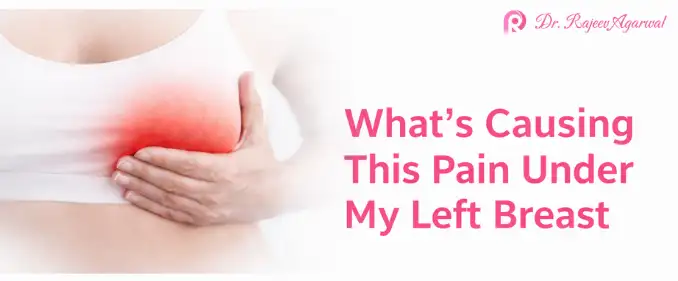
what-causes-pain-under-left-breast.webp

February 20, 2026 Uncategorized

Breast pain is quite common irrespective of age; however, not only women but also men can experience it. There can be many causes of this breast pain, and it is usually not breast cancer, as it can be associated with muscle issues, hormonal changes, or digestive issues. If you experience a sudden and sharp pain, whether a dull lingering ache or a puncturing sensation that pushes you to stop in between doing something, then it is best to get yourself checked with the best breast cancer doctor to know the root cause of the same.

Causes of left-sided breast pain

The left side of the chest is closely linked to many other vital organs, including the heart, stomach, lungs, and other structures. Discomfort in this area can be dangerous and often trigger anxiety in terms of serious complications. However, you must understand that all pain here is risky, and the root cause can range from simple muscle strain to trapped gas or to much more severe issues. Because the area comprises muscles, ribs, and other connective tissue, the causes of pain on the left side under the breast can be many. Pain in this area can be due to:

1. Musculoskeletal causes

Pain under the left breast may be due to strain of the chest wall muscles and inflammation of the connective tissue linking the ribs and the breastbone. The pain is localised and may be due to heavy lifting, slouching, or strenuous exercise.

2. Digestive causes

Also, the pain in the left under-breast area can also be due to a digestive issue that makes a person uncomfortable, like excess gas, indigestion, gastritis, and acid reflux. Their sudden sharp pain can be mainly after heavy meals or carbonated drinks.

3. Lung-associated factors

Also, the pain can be due to lung-related factors, including lung inflammation, mild pleurisy, and triggers that worsen with inhalation. The reasons can be respiratory infections or irritation of the lung lining, which is the cause for discomfort.

4. Cardiac sources

Some factors can be linked with cardiac issues, and the underlying breast pain can be due to heart issues like angina. If the pain is accompanied by other signs, such as dizziness, shortness of breath, or sweating, you must consult a doctor immediately to get yourself checked.

5. Gynecological causes

The pain left under the breast can be due to many breast-related issues or gynecological issues like hormonal fluctuations, benign tumors, or cysts of the breasts. The pain can be characterised by localised tenderness. The aches are cyclical and can also be related to the menstrual period.

6. Breast injury

Breast injury may also be the cause of the breast pain. Other related injuries can trigger the pain, like blunt breast trauma, motor vehicle collisions, etc.

7. Breastfeeding

Breastfeeding can also be affected by issues such as mastitis, engorgement, and improper latching, which are due to inflammation of breast tissue, overfilling of breasts with milk, or incorrect latching by the baby.

8. Breast infection

It can also cause breast pain, as initially, patients feel non-infectious inflammation that leads to abscess formation.

9. Medication side effects

Medications can also be the reason for the breast pain, as medications like hormonal replacement therapy or cardiovascular medications, etc., can lead to pain.

How to know the pain is due to breast cancer?

Most breast pain is not linked with breast cancer, according to the best breast cancer doctor in Gurgaon breast cancer does not cause pain. However, breast cancer is more common on the left side than on the right. If you have left-sided breast cancer, the signs that you may experience will be the same if the tumor is on the right side. The signs to notice are:

  • Breast pain or nipple pain
  • Breast or nipple skin turns red, dry, flaky, or thickened.
  • A lump or hard mass within the breast.
  • Nipple discharge
  • Nipple retraction
  • Skin dimpling
  • Swelling of all parts of the breast
  • Swollen lymph nodes located under the arm or near the collarbone.

In some cases, you may have no symptoms or only a dull ache. It is best to consult the best breast cancer doctor to know all the details. In most cases, breast pain is benign, but early evaluation and diagnosis are necessary for your health as well as peace of mind. Your doctor will recommend whether further testing is appropriate to confirm the cause of your pain.

Difference in symptoms between cancerous and non-cancerous breast pain

The signs of cancerous and non-cancerous breast pain can overlap and can make a person confused. Women who experience swelling, pain, breast tenderness, or lumps in the breast may consult the best breast cancer doctor in Gurgaon to rule out the root cause. However, noncancerous breast pain may be due to hormonal fluctuations and is usually localised with swelling and tenderness, and diuresis after menstruation is completed. On the other hand, the cancerous breast pain is persistent and non-cyclical and also comes with many different symptoms like nipple discharge, lumps, and a change in the shape and size of the breast. So when you experience breast pain with other listed signs, you must consult a breast cancer doctor to get yourself evaluated and to get the on-time early treatment to avoid future complications.

Conclusion

Breast pain can be frustrating, not only physically but emotionally as well, and can mess with your sleep, relationships, etc. If the breast pain is constant and close to your menstrual cycle, then it is fine, but if it is outside your menstrual cycle phase, then you must consult a doctor to get it checked. However, breast pain is not the only sign of breast cancer and can be due to many other reasons as well, as listed above. The doctor will advise you to undergo further testing to rule out possible causes and to start the best treatment for you. Get in touch with Dr. Rajeev Aggarwal, one of the renowned oncologists in Gurgaon, offering specialized care to many disease-related breast conditions and specializing in treating breast cancer, breast lumps, breast pain management, etc. Get a proper personalized treatment plan tailored to your specific diagnosis and requirements.


Dr.-Rajeev-Agarwal-2.webp

November 17, 2025 Uncategorized

स्तन दर्द, जिसे मास्टाल्जिया भी कहा जाता है, सभी उम्र की महिलाओं में एक आम चिंता का विषय है। हालाँकि स्तन दर्द के ज़्यादातर मामले कैंसर-संबंधी नहीं होते बल्कि ये हार्मोनल बदलाव, सिस्ट या संक्रमण के कारण होते हैं, लेकिन यह बेचैनी काफ़ी चिंता का कारण बन सकती है—खासकर स्तन कैंसर के डर के कारण। स्तन दर्द का निदान कैसे किया जाता है और कौन से परीक्षण आवश्यक हैं, यह समझने से आपको इस समस्या का समाधान समय पर चिकित्सा सहायता लेने से मिल सकती है।

स्तन दर्द के निदान के बारे में गहराई से जाने से पहले, यह जानना ज़रूरी है कि सभी स्तन दर्द किसी गंभीर बीमारी का संकेत नहीं होते। चिकित्सकीय भाषा में, स्तन दर्द को दो मुख्य प्रकारों में वर्गीकृत किया जाता है – चक्रीय और गैर-चक्रीय।

चक्रीय स्तन दर्द

इस प्रकार का दर्द मासिक धर्म चक्र और हार्मोनल उतार-चढ़ाव से जुड़ा होता है। यह आमतौर पर मासिक धर्म से पहले होता है और बाद में कम हो जाता है। दर्द अक्सर हल्का, भारी होता है और दोनों स्तनों को प्रभावित करता है। यह 20-40 वर्ष की आयु की महिलाओं में सबसे आम है।

गैर-चक्रीय स्तन दर्द

यह दर्द मासिक धर्म से संबंधित नहीं है और एक या दोनों स्तनों में हो सकता है। यह तेज, स्थानीय या लगातार हो सकता है। इसके कारणों में चोट, संक्रमण (स्तनशोथ), सिस्ट, कुछ दवाएं, या स्तन के पास मस्कुलोस्केलेटल दर्द भी शामिल हैं। हालाँकि अकेले स्तन दर्द शायद ही कभी स्तन कैंसर का संकेत होता है, लेकिन अगर यह बना रहता है, बिगड़ जाता है, या इसके साथ गांठ, निप्पल से स्राव, या त्वचा में बदलाव जैसे अन्य लक्षण दिखाई देते हैं, तो इसे नज़रअंदाज़ नहीं करना चाहिए।

आपको डॉक्टर से कब मिलना चाहिए?

आपको डॉक्टर से परामर्श लेना चाहिए अगर:-

  • दर्द दो हफ़्तों से ज़्यादा समय तक बना रहे
  • स्तन में गांठ या मोटा क्षेत्र हो
  • आपको निप्पल से स्राव दिखाई दे (खासकर अगर उसमें खून आ रहा हो)
  • स्तन की त्वचा लाल, गड्ढेदार या सूजी हुई हो
  • दर्द आपकी दैनिक गतिविधियों या नींद में बाधा डालता हो

समय पर परामर्श किसी भी अंतर्निहित समस्या का जल्द पता लगाने और मन की शांति सुनिश्चित करता है।

डॉक्टर स्तन दर्द के निदान के लिए क्या करते हैं

स्तन दर्द का निदान एक विस्तृत चिकित्सा मूल्यांकन से शुरू होता है। डॉक्टर यह निर्धारित करने का लक्ष्य रखते हैं कि दर्द हार्मोनल है, मांसपेशियों से संबंधित है, या स्तन tissue की असामान्यताओं से संबंधित है। निदान प्रक्रिया में आमतौर पर निम्नलिखित चरण शामिल होते हैं:

  1. चिकित्सा इतिहास और लक्षण समीक्षा

आपका डॉक्टर सबसे पहले आपके लक्षणों के बारे में विस्तृत प्रश्न पूछेगा, जैसे:-

  • दर्द कब शुरू हुआ और कितने समय तक रहता है?
  • क्या दर्द स्थानीय है या पूरे स्तन में फैला हुआ है?
  • क्या यह आपके मासिक धर्म चक्र के साथ बदलता रहता है?
  • क्या आपको छाती के क्षेत्र में कोई चोट या सर्जरी हुई है?
  • क्या आप हार्मोनल थेरेपी, गर्भनिरोधक या अन्य दवाएं ले रही हैं?
  • क्या स्तन रोग या कैंसर का कोई पारिवारिक इतिहास है?

इस चर्चा से यह पता लगाने में मदद मिलती है कि दर्द चक्रीय है, गैर-चक्रीय है, या मांसपेशियों या पसलियों जैसी आस-पास की संरचनाओं से फैल रहा है।

  1. शारीरिक परीक्षण

आपका चिकित्सा इतिहास जानने के बाद, डॉक्टर एक नैदानिक ​​स्तन परीक्षण (सीबीई) करते हैं। इस चरण में शामिल हैं:

  • सूजन, लालिमा, गड्ढे या निप्पल से स्राव जैसे दिखाई देने वाले परिवर्तनों के लिए दोनों स्तनों का निरीक्षण करना।
  • गांठ, सिस्ट या कोमलता की जाँच के लिए स्तन ऊतक और बगल के क्षेत्रों को छूना (महसूस करना)।
  • समरूपता, त्वचा की बनावट और अंतर्निहित ऊतक की स्थिरता का आकलन करना।

सामान्य फाइब्रोसाइटिक ऊतक परिवर्तनों और असामान्य वृद्धि के बीच अंतर करने के लिए नैदानिक ​​परीक्षण महत्वपूर्ण है।

  1. संबंधित लक्षणों की पहचान

कभी-कभी, स्तन दर्द स्तन के बाहर के कारणों से भी हो सकता है, जैसे:

  • व्यायाम या खराब मुद्रा के कारण मांसपेशियों में खिंचाव या छाती की दीवार में दर्द।
  • कॉस्टोकॉन्ड्राइटिस, जो पसलियों को उरोस्थि से जोड़ने वाली उपास्थि की सूजन है।
  • कंधे, रीढ़ या हृदय से दर्द।

यदि स्तन से इतर कारणों का संदेह है, तो डॉक्टर आपको आगे की जाँच के लिए किसी विशेषज्ञ के पास भेज सकते हैं।

स्तन दर्द के लिए नैदानिक ​​परीक्षण

एक बार नैदानिक ​​परीक्षण पूरा हो जाने के बाद, विशिष्ट नैदानिक ​​परीक्षण किसी भी अंतर्निहित स्तन संबंधी समस्या का पता लगाने में मदद करते हैं। परीक्षणों का चुनाव आपकी उम्र, लक्षणों और परीक्षण के निष्कर्षों पर निर्भर करता है।

  1. मैमोग्राफी

मैमोग्राफी स्तन का एक एक्स-रे है जो गांठ, कैल्सीफिकेशन या ट्यूमर जैसी असामान्यताओं का पता लगाने में मदद करता है। यह स्तन मूल्यांकन में इस्तेमाल किया जाने वाला सबसे आम इमेजिंग परीक्षण है, खासकर 40 वर्ष से अधिक उम्र की महिलाओं के लिए।

अगर दर्द बना रहता है या अन्य लक्षणों से जुड़ा होता है, तो डॉक्टर आमतौर पर नैदानिक ​​मैमोग्राम (चिंता के क्षेत्र पर केंद्रित) की सलाह देते हैं। यह कब अनुशंसित है:

  • लगातार या अस्पष्टीकृत स्तन दर्द
  • गांठ या निप्पल में बदलाव की उपस्थिति
  • 40+ आयु वर्ग की महिलाओं के लिए स्क्रीनिंग

यह परीक्षण स्तन की आंतरिक संरचना की स्पष्ट तस्वीर प्रदान करता है और स्तन कैंसर के शुरुआती लक्षणों का भी पता लगाने में मदद करता है।

  1. स्तन अल्ट्रासाउंड

स्तन अल्ट्रासाउंड में स्तन ऊतक की तस्वीरें लेने के लिए ध्वनि तरंगों का उपयोग किया जाता है। यह युवा महिलाओं (40 वर्ष से कम उम्र की) के लिए एक पसंदीदा परीक्षण है क्योंकि उनके स्तन ऊतक सघन होते हैं, जिससे मैमोग्राफी कम प्रभावी होती है।

अल्ट्रासाउंड ठोस पिंडों (जैसे ट्यूमर) और द्रव से भरे सिस्ट के बीच अंतर करने में मदद करता है। यदि कोई संदिग्ध क्षेत्र पाया जाता है, तो यह सुई बायोप्सी के लिए भी सहायक होता है। इसकी सिफारिश कब की जाती है:-

  • शारीरिक परीक्षण के दौरान पाई गई गांठ का मूल्यांकन करने के लिए
  • स्थानीयकृत दर्द या सूजन के मामलों में
  • सघन स्तन tissues वाले रोगियों के लिए

यह एक दर्द रहित, त्वरित और विकिरण-मुक्त इमेजिंग विकल्प है।

  1. एमआरआई (मैग्नेटिक रेजोनेंस इमेजिंग)

स्तन एमआरआई विस्तृत, उच्च-रिज़ॉल्यूशन वाली तस्वीरें प्रदान करता है और इसका उपयोग तब किया जाता है जब अन्य इमेजिंग परीक्षण अनिर्णायक परिणाम देते हैं। यह विशेष रूप से उन महिलाओं के लिए उपयोगी है जिनके परिवार में स्तन कैंसर का इतिहास रहा है या जिनके स्तन प्रत्यारोपण हुए हैं, जहाँ मैमोग्राफी स्पष्ट दृश्यता प्रदान नहीं कर सकती है। इसकी अनुशंसा कब की जाती है:-

  • मैमोग्राम या अल्ट्रासाउंड में पाई गई असामान्यताओं का आकलन करने के लिए
  • उच्च जोखिम वाले रोगियों या सर्जरी के बाद के मूल्यांकन के लिए
  • निदान किए गए मामलों में उपचार की प्रतिक्रिया की निगरानी के लिए

हालांकि स्तन दर्द के लिए इसका नियमित रूप से उपयोग नहीं किया जाता है, एमआरआई जटिल या अस्पष्ट निदान स्थितियों में महत्वपूर्ण भूमिका निभाता है।

  1. फ़ाइन नीडल एस्पिरेशन साइटोलॉजी (FNAC) या बायोप्सी

यदि कोई संदिग्ध गांठ, सिस्ट या घाव पाया जाता है, तो डॉक्टर FNAC या बायोप्सी की सलाह दे सकते हैं।

  • FNAC: सूक्ष्म परीक्षण के लिए कोशिकाओं को एकत्रित करने हेतु गांठ में एक पतली सुई डाली जाती है।
  • कोर नीडल बायोप्सी: एक बड़ी सुई ऊतक का एक छोटा नमूना लेकर यह पुष्टि करती है कि यह सौम्य है या घातक।

ये प्रक्रियाएँ किसी भी ज्ञात असामान्यता की प्रकृति की पुष्टि करती हैं और आगे के उपचार का मार्गदर्शन करती हैं।

  1. हार्मोनल और रक्त परीक्षण

कुछ मामलों में, डॉक्टर हार्मोन के स्तर, थायरॉइड फ़ंक्शन या संक्रमण के संकेतों का आकलन करने के लिए रक्त परीक्षण की सलाह दे सकते हैं। हार्मोनल असंतुलन (विशेषकर एस्ट्रोजन या प्रोजेस्टेरोन से संबंधित) अक्सर चक्रीय स्तन दर्द से जुड़े होते हैं।

संक्रमण से संबंधित स्तन दर्द (जैसे स्तनदाह) में श्वेत रक्त कोशिकाओं की संख्या में वृद्धि या सूजन के संकेत दिखाई दे सकते हैं।

Also Read-: स्तन दर्द से राहत: घर पर आजमाए जा सकने वाले प्राकृतिक उपचार


डॉक्टर परिणामों की व्याख्या कैसे करते हैं

सभी परीक्षण पूरे होने के बाद, आपका डॉक्टर दर्द का सटीक कारण निर्धारित करने के लिए परिणामों की सामूहिक समीक्षा करता है।

  • यदि सभी इमेजिंग और लैब परीक्षण सामान्य हैं, तो यह संभवतः हार्मोनल या मांसपेशियों से संबंधित है।
  • यदि सिस्ट पाए जाते हैं, तो उन्हें निकाला जा सकता है या दवा से नियंत्रित किया जा सकता है।
  • यदि संक्रमण पाया जाता है, तो एंटीबायोटिक्स और गर्म सिकाई आमतौर पर मददगार होती है।
  • यदि ट्यूमर या असामान्य कोशिका वृद्धि का पता चलता है, तो एक विस्तृत कैंसर मूल्यांकन और उपचार योजना बनाई जाती है।

यह व्यवस्थित दृष्टिकोण अनावश्यक तनाव या प्रक्रियाओं को रोकते हुए सटीकता सुनिश्चित करता है।

क्या स्तन दर्द स्तन कैंसर का संकेत हो सकता है?

हालाँकि अकेले स्तन दर्द आमतौर पर स्तन कैंसर का संकेत नहीं होता, लेकिन लगातार या स्थानीयकृत दर्द—खासकर अन्य लक्षणों के साथ—के लिए सावधानीपूर्वक जाँच ज़रूरी है।

भारत में, कई महिलाएँ डर या कलंक के कारण चिकित्सकीय परामर्श में देरी करती हैं, जिससे गंभीर स्थितियों का पता देर से चल पाता है।

30 वर्ष से अधिक आयु की सभी महिलाओं, खासकर जिनके परिवार में स्तन कैंसर का इतिहास रहा हो, के लिए नियमित रूप से स्वयं स्तन परीक्षण (एसबीई) और वार्षिक जाँच की सलाह दी जाती है।

स्तन दर्द का प्रबंधन

यदि कोई गंभीर अंतर्निहित समस्या नहीं पाई जाती है, तो जीवनशैली और घरेलू उपचार अक्सर असुविधा को कम करने में मदद कर सकते हैं:-

  • तनाव कम करने के लिए सपोर्टिव ब्रा पहनें।
  • गर्म या ठंडी सिकाई करें।
  • कैफीन और उच्च वसा वाले खाद्य पदार्थों का सेवन कम करें।
  • विटामिन ई और बी6 से भरपूर संतुलित आहार लें।
  • धूम्रपान और अत्यधिक शराब के सेवन से बचें।
  • विश्राम तकनीक या हल्के व्यायाम का अभ्यास करें।

कभी-कभी, आपका डॉक्टर गंभीर मामलों में ईवनिंग प्रिमरोज़ तेल, हल्के दर्द निवारक या हार्मोनल थेरेपी की सलाह दे सकता है।

निष्कर्ष

स्तन दर्द परेशान करने वाला हो सकता है, लेकिन ज़्यादातर मामलों में, यह कैंसर का संकेत नहीं होता। ज़रूरी है कि आप अपने शरीर को समझें, असामान्य बदलावों को जल्दी पहचानें और सही निदान के लिए किसी योग्य विशेषज्ञ से सलाह लें।

मैमोग्राफी, अल्ट्रासाउंड और FNAC जैसे परीक्षण मूल कारण का पता लगाने में अहम भूमिका निभाते हैं, जिससे यह सुनिश्चित होता है कि किसी भी गंभीर स्थिति का जल्द पता लगाया जा सके और उसका प्रभावी ढंग से इलाज किया जा सके।

विशेषज्ञ मूल्यांकन और सहानुभूतिपूर्ण देखभाल के लिए, Gurgaon के सर्वश्रेष्ठ स्तन कैंसर डॉक्टरों में से एक, डॉ. राजीव अग्रवाल जैसे प्रतिष्ठित विशेषज्ञ से परामर्श लेने से आपको सटीक निदान और मन की शांति मिल सकती है। याद रखें – समय पर जाँच और जागरूकता स्तन संबंधी बीमारियों से बचाव का सबसे अच्छा उपाय है।


Dr.-Rajeev-Agarwal-1-1.webp

November 5, 2025 Uncategorized

Breast cancer has been the most common cancer threatening women across the globe. The treatment has improved dramatically over the past few decades. The medical advancements give millions of women a chance to live long and healthy lives after recovery. 

However, the one question that has been raising concern in the minds of cancer survivors is the possibility of breast cancer recurrence. It happens when the disease returns after a period of remission.

While most recurrences happen within the first five years after treatment, studies show that breast cancer can sometimes return even after 10, 15, or 20 years. 

This risk typically depends on several factors, such as the type of breast cancer, initial stage, and ongoing treatment approach.

Learning the long-term chances of breast cancer recurrence can help cancer survivors stay updated and make informed decisions. 

This blog will look into everything you must know about the chances of breast cancer recurrence after 10, 15, or 20 years. 

What Is Breast Cancer Recurrence?

The recurrence of breast cancer refers to the return of cancer cells after success treatment and a period when no cancer was detectable. It can even occur after surgery, chemotherapy, radiation, or hormone therapy as a few microscopic cancer cells may survive and remain inactive in the body for years. But as time passes, these inactive cells can start growing lead. This is what leads to recurrence. 

There are three main types of breast cancer recurrence:

  • Local recurrence: When cancer returns in the same breast or the surgical scar area.
  • Regional recurrence: When cancer reappears in nearby lymph nodes, such as those in the underarm or collarbone area.
  • Distant recurrence (metastatic): When cancer spreads to other parts of the body like the bones, lungs, liver, or brain.

Well, recurrence does not mean treatment failed, it means the cancer has found a way to reappear. 

What Causes Breast Cancer to Recur?

While the primary recurrence of breast cancer generally happens when some cancer cells survive and become active again over time even after the initial treatment. 

These cells may remain inactive for years before they start to grow. However, the reasons for recurrence can vary from person to person. A few several key factors can increase the likelihood:

  • Cancer stage at diagnosis: In the case of an advanced stage of cancer at the time of initial diagnosis, the chances are higher that cancer cells may have already spread beyond the breast.
  • Hormone receptor status:
    -ER/PR-positive cancers may recur even after 10–20 years. It happens because these cancers can stay inactive for long periods.

-Triple-negative cancers are more likely to return within the first five years. 

  • Type of treatment received: An incomplete or unsuccessful removal of cancer cells during surgery, or skipping recommended therapies like radiation or hormone therapy, can leave residual cancer cells behind.
  • Lifestyle and overall health: Beyond clinical treatments, lifestyle factors like smoking, obesity, poor diet, and lack of physical activity can contribute to a higher recurrence risk.
  • Genetic and biological factors: Mutations like BRCA1 or BRCA2 can also increase the likelihood of both recurrence and new breast cancers.

Also Read – : What You Need to Know About Your Breast Cancer

Chances of Breast Cancer Recurrence Over Time

As said above, the recurrence of breast cancer depends on different factors. While most recurrences happen within the first five years after treatment, some types can also return after 10, 15, or 20 years.

Let’s understand how recurrence risk changes over time.

Recurrence Within 5–10 Years

The first 5-10 years is the most common period for breast cancer recurrence. Several studies show that around 7–11% of breast cancer survivors experience recurrence within this timeframe. Moreover, triple-negative and HER2-positive cancers are more likely to recur early. However, less likely to return after 10 years. Going for regular follow-ups, mammograms, and hormone therapy is critical during this period.

Recurrence After 10 Years

So, even after a decade, breast cancer recurrence is possible. It is more common for individuals with ER-positive breast cancers. According to research, 10–20% of patients with hormone receptor-positive cancer may face recurrence after 10 years. Most often, these late recurrences occur in distant organs like bones or lungs rather than in the breast itself. Continuing with hormone therapy for 10 years can help reduce long-term recurrence risk.

Recurrence After 15 Years

While the chances of breast cancer recurrence are less after 15 years, it is still possible. It is common in women with initially large tumours or positive lymph nodes. Some studies have found that women with ER-positive and node-positive breast cancer have about a 10% chance of recurrence between years 15 and 20. Maintaining healthy habits and regular medical check-ups is important even after many years of remission.

Recurrence After 20 Years

While rare, breast cancer recurrence can happen even after 20 years. It is more common to develop in some slow-growing cancers. Individuals with hormone receptor-positive cancers are more likely to return late than people dealing with triple-negative types. Lifelong awareness, yearly mammograms, and prompt evaluation of new symptoms can help catch any late recurrence early.

Signs and Symptoms of Recurrence

It is critical to recognize the early signs and symptoms of breast cancer recurrence to ensure timely diagnosis and treatment. The symptoms can vary depending on whether the recurrence is local, regional, or distant (metastatic). 

All in all, staying alert to any unusual changes in your body and discussing them with your doctor can make a major difference.

1. Local Recurrence

The local recurrence happens when cancer returns in the same breast or nearby to the surgical area. Some most common signs include:

  • A new lump or thickening near the mastectomy or lumpectomy scar
  • Changes in the skin texture, such as redness, swelling, or dimpling
  • Nipple changes or discharge (if breast tissue remains)
  • Persistent pain or tenderness around the treated area

2. Regional Recurrence

The regional recurrence can affect the nearby lymph nodes. Some common signs to look out for as follows:

  • Swelling or lumps under the arm, near the collarbone, or in the neck area
  • A feeling of tightness or discomfort in the chest or armpit
  • Persistent swelling in the arm or hand (lymphedema)

3. Distant or Metastatic Recurrence

When cancer spreads to other parts of the body, symptoms depend on where it reappears.
The common signs include:

  • In case cancer spread to bones, bone pain or fractures may occur. 
  • If lungs are affected, shortness of breath or persistent cough may occur. 
  • If liver is involved, abdominal pain or jaundice may happen. 
  • If brain is affected, it is normal to experience severe headaches, dizziness, or vision problems. 
  • Unexplained fatigue or weight loss.

How to Lower the Risk of Recurrence?

Well, there is no one full-proof way to eliminate the risk of breast cancer recurrence. But there are some ways to minimize this risk and support long-term health. A few effective ways include:

1. Continue Prescribed Hormone Therapy

For women diagnosed with hormone receptor-positive breast cancer, it is important to continue with hormone therapy, such as Tamoxifen or aromatase inhibitors for at least 5-10 years. It can help reduce the risk of the late recurrence. In addition, never stop your medication without consulting your oncologist.

2. Maintain a Healthy Weight

Excess body fat can increase estrogen levels and inflammation. Both of them can increase the risk of recurrence. Thus, following a balanced diet rich in vegetables, fruits, whole grains, and lean proteins is recommended to maintain a healthy weight.

3. Stay Physically Active

Keep yourself active physically, such as light walking, yoga, or swimming. All of this has shown to lower recurrence risk by improving hormone balance and immunity. It is recommended to strive for at least 150 minutes of moderate activity per week.

4. Limit Alcohol and Avoid Smoking

Drinking alcohol can raise estrogen levels, and smoking may interfere with healing and increase cancer risk. Minimizing or completely eliminating both can have a lasting positive impact and reduced recurrence risk.

5. Manage Stress and Prioritize Mental Health

Dealing with chronic stress can affect immune function and overall health. Mindfulness, meditation, and counseling can help manage anxiety about recurrence and improve quality of life.

6. Follow Up Regularly with Your Doctor

Attending routine checkups, mammograms, and blood tests is critical for catching any signs of recurrence early. Ensure to share any new or unusual symptoms with your healthcare provider.

7. Eat a Balanced and Anti-Inflammatory Diet

Include foods high in antioxidants. Berries, nuts, green tea, and olive oil are a few of the examples. Moreover, it is advised to reduce processed foods and sugars. Having good nutrition can support faster recovery and immune defense.

Conclusion

Breast cancer can appear again even 10, 15, or 20 years after initial treatment. However, the risk of recurrence varies according to cancer type, stage, and therapy. Remember to understand recurrence patterns to stay vigilant and take proactive steps. Moreover, regular follow-ups, awareness of symptoms, adherence to prescribed treatments, and healthy lifestyle choices can significantly reduce the risk. 

If you are seeing any signs or symptoms of breast cancer recurrence, then book your consultation now at Dr. Rajeev Agarwal.


Dr.-Rajeev-Agarwal-1.webp

September 29, 2025 Uncategorized

Many women experience painful breasts with tenderness and soreness, and wonder why their breasts hurt and feel heavy and start worrying about whether it could be a sign of breast cancer. However, only a sign of breast pain does not indicate breast cancer, as the pain is bothersome but is rarely a sign of cancer; breast pain interferes with your day-to-day tasks and should be checked by the best breast cancer doctor to know the causes and to get it treated. Breast pain is very common among women, as about 75 to 80 percent of them experience this pain at some point in life.  Breast pain is also termed as mastalgia, and it often occurs during the time of the  menstrual cycle and can be in one or both breasts.  It can be sharp, mild or even shooting pain and can be due to many reasons.

Also read: Top 10 Quick Remedy for Breast Pain

Types of breast pain 

Breast pain is of many types, and you must understand them well to know when you have to take it seriously : 

  • Cyclic breast pain 

It is the type of breast pain which  occurs in both breasts a day before the menstrual cycle. It is said to be the most common pain in women; however, it disappears for set periods, but in some cases, it may become severe and extend throughout the cycle. In many cases, the pain improves with time, irrespective of the type of treatment. 


  • Non-cyclic breast  pain 

It is also a type of breast pain in one breast that is not related to the menstrual cycle and can be due to pregnancy or trauma. The pain can be experienced in one breast and begins in the nipple and radiates to the armpit. This pain is also very common and resolves on its own; if it persists for more than three months, then it needs medical attention. 

Causes of  breast pain 

Breast pain involves discomfort, pain and tenderness in the breast or underarm area and can be due to many reasons. It affects many females in their reproductive years and is the most frequent complaint in the ages of 15 to 40.  There are many causes of breast pain that you must understand : 

  • Hormonal changes 

Hormonal fluctuations are said to be the primary cause of breast pain in women. Females feel breast tenderness or soreness a few days before their menstrual periods. This is because of the rise of progesterone and estrogen in their body. This pain is a cyclic type and is nothing to worry about, and it goes away when your period begins. 


  • Incorrect bra fit 

Another reason for the breast pain can be the fit of your bralette, as if you wear a tight-fitting bra, especially an underwire bra, then it can cause the pain. This is because the inflammation in the ligaments that connect your breast to the chest wall becomes painful and overstretched. However, it can be managed well by wearing a properly-fitting bra and a non-wired one. Also, you must wear supportive bras when exercising. 


  • Fibrocystic breast tissue

Another reason for breast pain is the lumpy breast tissue,, also termed fibrocystic breasts, which develops pain during certain times of the month. The main cause of this type of issue is hormonal fluctuations; however, keep in mind that lupus is not also connected with breast cancer, as they are fluid-filled cysts that can be managed and treated effectively by using warm and cold compresses and taking over-the-counter medications. 


  • Breast injury 

It can be another cause of breast pain in women, as breasts are susceptible to injuries, same like any other body part. These injuries can be injured due to accidents, surgery, getting impacted, nats, etc. This injury can cause swelling of the breast vein and form a blood clot and lead to severe pain that can last for a few days to weeks post-treatment.


  • Medications

Certain medications are also responsible for the breast pain as they trigger the pain extremely. These medications can be for mental health conditions, hormonal therapies, high BP or for low blood cell count.  However, you have to discuss this with your doctor to get your medication changed to solve the issue.


  • Breastfeeding and infection

It is also one of the causes of breast pain, as breastfeeding can cause cracked and sore nipples. The time you can feel sharp pain, but that pain can lead to breast pain; however, it can be eased by using ointments or by softening the nipples before breastfeeding.  Also, breast infection can be the cause of pain sometimes and is termed as Mastitis, which is swelling and inflammation of the breasts. Breast infection is common in breastfeeding women and rare in women who are not breastfeeding.


Breast pain treatment

To get the breast pain treatment, you need a proper diagnosis by an expert, and for that, the breast surgeon will confirm the cause first, and for that, they will examine changes in the breast and the lymph nodes in the lower neck and underarm. Then the expert will inspect the heart, lungs, chest and abdomen to know the exact location of pain. If the doctor detects any lump of pain in breast tissue, then they might recommend mammograms of the specific pain and proceed with the treatment accordingly. After knowing the exact  root cause of the pain, the breast surgeon may advise you : 

  • To wear a proper fit bra is needed, and we will also suggest that you apply topical anti-inflammatory drugs. 
  • He may also suggest changing the birth control pill if you use it, and also advise you to change your method of birth control to lessen breast pain symptoms. 
  • Also, the doctor may suggest a lower dosage of hormone therapy for menopause if you are at the menopausal stage and will also recommend using approved medication if you have been diagnosed with fibrocystic breasts. 


When to worry about breast pain- Whom to consult? 

Breast pain is very common, but should not be ignored, as it can be alarming as well. Pain in the breast can end for many reasons, and breast cancer is also on the rise. Prevention is better than cure, and thus, you must consult the best breast cancer doctor to get yourself evaluated to know the exact cause of your pain. Breast pain needs proper evaluation by experts to rule out the conditions and to get appropriate treatment on time.  You should not ignore the breast pain symptoms; however, many times it resolves itself, but if you notice any changes in your breasts or any other connecting signs, then it is time to consult a specialist to get the treatment on time. Consult the doctor immediately if : 


  • You notice new or unexplained lumps or masses in the breast, whether painful or not. The Thai pumps should be properly evaluated by a doctor to get treatment.
  • If you experience persistent pain in the breasts and if not related to the menstrual cycle, it needs proper evaluation and guidance from a breast specialist.
  • If you notice nipple discharge, especially bloody  
  • If you have breast pain along with fever and infection, it can be a sign of breast infection and which needs proper treatment.
  • If you have a family history of breast cancer and are at risk, discuss your concerns with the breast cancer doctor in Gurgaon to get help.
  • If your symptoms are worsening with time and returning to be more severe, visit the specialist immediately. 


Conclusion 

Early detection of breast-related concerns will be helpful . If you seek the best breast pain treatment in Gurgaon, consult Dr Rajeev Aggarwal . He has more than 40 years of experience and is a board-certified surgeon known for handling many breast cancer patients and has a patient-centric approach.  He specializes in and has extreme precision in detecting and diagnosing breast pain treatment, along with the surgical interventions. Consult DR Rajeev Aggarwal, a well-known breast cancer surgeon in Gurgaon is for expert valuation and to get appropriate treatment and care. 


Dr.-Rajeev-Agarwal-2.webp

August 28, 2025 Breast Cancer Treatment

Breast cancer is considered the common cancer that affects many women and some men every year. If diagnosed early, breast cancer is highly treatable and potentially curable. However, there are many factors, including the type of cancer diagnosis, the stage of breast cancer, and overall health, that affect the patient’s long-term outcomes. Understanding breast cancer is important for you to know at what stage it is treatable and whether it is curable or not. However, stages 0 to 3 are curable stages, and stages 4 are incurable, but with proper, on-time, and appropriate treatments, patients can live a better life. 

Breast Cancer – An Overview

Breast cancer is a complex condition that develops when the cells in the breast mutate as well as grow uncontrollably. It is a common type of cancer, with  many types: 

  • Invasive ductal carcinoma- A common type in which cancer cells have spread in many body areas beyond the milk ducts into the surrounding breast tissues. 
  • Ductal carcinoma in Situ- It is a non-invasive type in which abnormal cells are limited to mild ducts and have not spread yet.
  • Invasive lobular carcinoma – It is the type of cancer that begins in milk-producing glands and spreads to nearby tissue.

Breast cancer is termed non-invasive if the tumour cells are still limited to the ducts and have not spread to other body organs. It is termed invasive when tumour cells spread into surrounding tissues or other body parts or organs and become metastatic. 

Breast cancer causes

The causes of breast cancer can be many; however,  it occurs when breast cells mutate and become tumorous, divide and multiply at a rapid rate that cannot be controlled. Some factors make a person more prone to breast cancer : 

  • If you are a woman and above 50 
  • If you have a family history of breast cancer, such as family, siblings, children or close relatives.
  • If you have inherited genetic mutations.
  • If you smoke too much, as tobacco is linked with many types of cancers
  • If you  are obese
  • If you have been through  radiation therapy previously
  • If you have used hormone replacement therapy.

Living with breast cancer – Stages 

Breast cancer diagnosis begins your journey that comprises physical, emotional and practical alterations by searching for the best treatment options, managing the side effects, seeking experienced support and undergoing significant reconstruction or other treatment options. Determination of breast cancer stages is done by the expert, as it will help them to determine the cancer severity and survival rates.

The staging of cancer also help doctors to make an appropriate treatment tailored to the patient and to determine all needed details like tumour size and the parts it has spread to. There are many stages of breast cancer: 

Early Stage

In stage 0 of breast cancer, the cancer cells are limited to the milk ducts and not affected by the surrounding breast tissue. If ignored or if remains unnoticed and left untreated,  the disease of stage 0 progresses to the next stage. The good thing is that almost all cases of stage 0 breast cancer are cured

Stage 1

In Stage 1 of breast cancer tumour is very small, is located in the breast tissue near the lymph nodes or both. This stage is further classified into 1A and 1 B.

  • In 1A, the size of the tumour is less than  2 cm and still not yet spread to other sites. 
  • In  1B,  the size is less than 2cm, but tumour cells start spreading to a small number of lymph nodes.   The era of detection of stage 1 of breast cancer makes its origin excellent, and patients have a great survival rate of five years, which is 99 per cent.

Stage 2 breast cancer

Stage 2 involves larger tumour cells as compared to the previous stage, but these are still limited to the milk ducts or close to lymph nodes. This stage  for better consideration is divided into 2A and 2B : 

  • In the 2A, no tumour in the breast can be seen but tumour cells are in fewer than four nearby lymph nodes. Also, in some cases of this stage the tumour size is 2cm, and cancer cells are in 4 lymph nodes. 
  • In 2B, the tumour is within 2to 5 cm in diameter and spreads to some of the four lymph nodes 
  • Also, the tumour in this stage is more than  5 cm in size , and no lymph nodes are involved. 

Stage 3 

The tumour in stage 3 of breast cancer is larger now and also spreads to nearby tissues like the skin covering the breast or muscles below. Stage 3 of breast cancer has excellent survival rates of about 87 per cent and is further subdivided into 3A,3B and 3C.

  • In 3A, the tumour is identified as smaller than 2cm and spread in about four to nine lymph nodes. Also,  in some cases, the tumour is larger and also involves tiny malignant cells in the lymph nodes.  In some cases, the tumour is larger than 5cm and spreads to a few lymph nodes in the breastbone and arms. 
  • In the 3B stage, the tumour can be of any size, and then it becomes malignant cells in the skin or chest, and the tumour cells have spread to nine nodes. 
  • Stage 3C- At this stage, the cancer cells may be there or not and involve more than ten or over that . The presence or absence of a breast tumour is noticed but it can spread to lymph nodes and is located in many body parts. 

Stage 4 of breast cancer 

Stage 4 of breast cancer is when the malignant cells have left the primary site and travelled to distant body organs, such as the lungs and liver. Bones or the brain are made of blood and start growing there. The survival rates are just 31.9% in the Thai stage, though some may also live longer with appropriate treatment. 

Is it possible to cure breast cancer completely? 

Breast cancer can be entirely cured, as with effective treatment, the disease will not return. However it depends upon many factories  that what will be the outcome including : 

  • The grade of the tumour
  • The stage  of the tumour
  • The type of breast cancer
  • Is the cancer estrogen, or ER2, protein positive or negative
  • The treatment option suitable for the person

Breast cancer is highly treatable in early stages, and the outlook in stages 0 to 3  is generally very positive. Advanced stage 4 breast cancer is not curable but can be managed well with proper treatment that focuses on : 

  • Shrinking the cancer 
  • Slowing the progress of the cancer
  • Reliving signs and symptoms

When to consult the breast cancer specialist? 

Regular breast examinations and mammograms can help detect tumours at early stages before you can feel or see them. Also, your body produces specific symptoms or breast changes that you must note; however, these changes do not always mean that you have breast cancer. Early detection is what you must keep a check on to get the  best cancer treatment options. You must note some early  signs of breast cancer : 

  • Breast swelling
  • Nipple discharge
  • Dimpling of the skin
  • Lump or swelling under the arm or collarbone
  • Skin changes on the nipple or breast.

Also, you must note the early warning signs of invasive breast cancer : 

  • Changes in the colour of the breasts
  • Changes in touch as it is warm, tender or hard
  • A breast lump
  •  Faking of nipple skin
  • Increase in breast shape or size
  • Redness of breast skin

The early sign of non-invasive breast cancer is just a lump, as the tumour is tiny and is only detectable by a mammogram. So a regular mammogram is essential to detect those signs that you cannot feel or see. 

Can you survive in  Stage 3 and Stage 4 of breast cancer? Is it possible

Stage 3 of breast cancer is a severe condition in which cancer is locally advanced, but it can be treated well, and long-term survival can also be attained.  DR Rajeev Aggarwal offers a combination of treatments, including surgery, hormonal therapy, targeted therapy with radiation and immunotherapy, to fight the cancer at several stages. 

Whom to consult for breast cancer treatment? 

When you notice the signs that are listed above for the various types of breast cancer or breast cancer that are listed above, consult the breast cancer specialist in Delhi and Gurgaon. Dr.  Rajeev Aggarwal is a renowned breast cancer specialist in Gurgaon with many years of expertise and a record of producing excellent results. He is among the best breast surgeons who use advanced cutting-edge surgical techniques to offer exceptional care and fast recoveries. He has been working for many years in Medanta Hospital, Gurgaon. It is among the top hospitals with a popular and well-known oncology department with high standards of care and uses the most innovative advanced techniques and the best high-tech tools. Stage 4 of breast cancer refers to the tumour that spreads to other body parts, leaving its original site, and some common sites are bones, lungs, liver and brain. In this stage, the tumour can be of any size, as well as lymph nodes may or may not contain tumour cells, but the cancer has metastasised. However, at this stage, the tumour is unlikely to be cured, but treatment may help to control the cancer for several months or even years. 


Dr.-Rajeev-Agarwal-1.webp

Navigating a breast cancer diagnosis can feel like venturing into uncharted waters. Knowledge is power, and understanding the various stages of breast cancer is an essential part of charting your course. From stage 0, where abnormal cells are just beginning to stir, all the way to stage 4, where cancer has spread beyond the breast, each stage has distinct characteristics. Knowing these differences not only helps in managing the disease but also in discussing treatment options with your healthcare team. In this guide, we’ll break down each stage to help you gain a clearer picture of what to expect as your journey unfolds.

Understanding Breast Cancer Stages

Navigating a breast cancer diagnosis can be overwhelming, and understanding the various stages is crucial in grasping the severity of the condition and plotting a path forward. Let’s dive into what staging really means and why it plays such a vital role in managing breast cancer.

Staging is essentially a way to describe the extent or severity of a cancer based on the size of the tumor, whether it has spread, and which parts of the body are affected. Knowing the stage helps doctors determine how serious the cancer is and how best to treat it. It also provides a common language for healthcare providers to discuss a patient’s diagnosis.

How Stages Are Determined

The most common method used to determine stages is the TNM system. This system evaluates three critical components:

  • T (Tumour size): How large is the primary tumor?
  • N (Nodes): Has the cancer spread to nearby lymph nodes?
  • M (Metastasis): Has the cancer spread to other parts of the body?

Each of these components is assessed and given a score, which is then used to assign an overall stage from 0 to 4.

The Role of Staging in Treatment and Prognosis

Understanding the stage helps doctors tailor a treatment plan that offers the best chance of success. It guides decisions about surgery, chemotherapy, radiation, and other breast cancer treatments. Moreover, staging gives insight into the likely progression of the disease, aiding in prognostic predictions. In essence, staging not only directs medical interventions but also offers hope and clarity to those navigating their cancer journey.

Stage 0: Non-Invasive Breast Cancer

Stage 0 breast cancer, also known as non-invasive or in situ breast cancer, is characterized by the absence of cancer cells invading nearby tissues. This early stage can signal the very beginning of a potential cancer journey but often comes with a favorable outlook. At this stage, the cancer cells remain confined within the ducts or lobules in the breast and haven’t invaded surrounding breast tissue. The most common type of Stage 0 breast cancer is Ductal Carcinoma In Situ (DCIS), where the abnormal cells are in the lining of a milk duct.

Diagnosis and Treatment Options

Diagnosing Stage 0 typically involves a mammogram or biopsy, wherein tiny samples of breast tissue are removed and examined. Despite its non-invasive nature, treatment is recommended to prevent progression to invasive cancer. Options often include:

  • Surgery: Lumpectomy or mastectomy to remove the cancerous cells.
  • Radiation Therapy: Typically used after surgery to eliminate any remaining abnormal cells.
  • Hormonal Therapy: May be considered, particularly if the cancer is hormone-receptor-positive.

Stage 1: Early-Stage Invasive Breast Cancer

Stage 1 breast cancer is like a wake-up call—still early, but with a bit more urgency to address. It indicates that cancer cells have invaded beyond the initial site, but they haven’t spread far or wide. Let’s explore this stage in more detail.

Characteristics of Stage 1

In Stage 1 breast cancer, the tumor can be up to 2 centimeters in size. At this point, the cancer is considered invasive, meaning it has begun to spread into the surrounding breast tissue. However, it is still quite localized and has not spread to distant parts of the body. Here’s where Stage 1 splits:

  1. Stage 1A: The tumor is up to 2 centimeters, and cancer hasn’t spread to the lymph nodes.
  2. Stage 1B: Tiny clusters of cancer cells are found in the lymph nodes, and either no tumor is found in the breast or the tumor is less than 2 centimeters.

Diagnosis and Treatment Options

Diagnosing Stage 1 breast cancer often involves a mammogram or an ultrasound to spot that sneaky lump. Once snagged, a biopsy confirms the diagnosis. Treatment can involve:

  • Surgery: Typically a lumpectomy to remove just the tumor, or a mastectomy to remove more extensive tissue.
  • Radiation Therapy: Often follows surgery to zap any remaining cancer cells.
  • Hormone Therapy: Recommended if the cancer cells have hormone receptors.
  • Chemotherapy: Sometimes used, depending on specific cancer characteristics.

The treatment aims to eradicate the cancer and prevent it from coming back—getting you back to living life freely!

Stage 2: Locally Advanced Cancer

Stage 2 breast cancer steps things up a notch with more development, but don’t worry—it’s still very treatable. This stage is where the cancer is a bit bigger or has spread to a few lymph nodes.

Characteristics of Stage 2

Stage 2 breast cancer means the cancer is larger and/or has spread to nearby lymph nodes. It’s still located largely within the breast or nearby regions. Here’s a breakdown:

  1. Stage 2A: No tumor is found in the breast, but cancer is in 1 to 3 lymph nodes, or the tumor is 2 to 5 centimeters with lymph node involvement.
  2. Stage 2B: The tumor is larger (2 to 5 centimeters) with a minor lymph node spread, or it’s over 5 centimeters without lymph node spread.

Diagnosis and Treatment Options

Diagnosis at Stage 2 typically involves imaging tests and possibly a lymph node ultrasound with biopsy. Treating Stage 2 can be more complex with customized plans:

  • Surgery: Options include lumpectomy or mastectomy, often with lymph node removal.
  • Radiation Therapy: To target any remaining cancer, especially after surgery.
  • Chemotherapy: More commonly used at this stage to tackle cancer cells vigorously.
  • Hormone or Targeted Therapy: Depending on cancer type, to specifically target and destroy cancer cells.

The goal here is not just to treat but to turn the tide against cancer’s local spread.

Stage 3: Regional Spread

Characteristics of Stage 3

Stage 3 breast cancer, often referred to as locally advanced cancer, is when the disease has spread beyond the immediate region of the tumor but hasn’t reached distant organs. It’s a significant step up from Stage 2, as the cancer could have spread into several nearby lymph nodes or other tissues around the breast.

At this stage, you might find:

  1. Large Tumors: Tumors can exceed 5 centimeters.
  2. Lymph Node Involvement: Cancer is found in up to 9 axillary lymph nodes (those under the arm) or has spread to lymph nodes near the breastbone.
  3. Skin or Chest Wall Involvement: The cancer may be growing into the skin, causing swelling or ulceration, or might have penetrated the chest wall.

Being at this stage doesn’t necessarily mean the situation is grim. There are numerous treatment routes available, and catching cancer at Stage 3 still holds hope for effective management.

Diagnosis and Treatment Options

Diagnosing Stage 3 breast cancer typically involves a myriad of tests, including but not limited to a physical exam, imaging tests like mammograms and MRIs, and possibly a biopsy to understand the specific characteristics of the cancer cells.

When it comes to treatment, you’ll be looking at a multi-faceted approach, often combining more than one method to tackle the cancer effectively. Common options include:

  • Surgery: This might be a lumpectomy, where only the tumor and surrounding tissue are removed, or a mastectomy, where the entire breast is removed.
  • Chemotherapy: Often used before surgery to shrink the tumor, making it easier to remove, or after surgery to kill any remaining cancer cells.
  • Radiation Therapy: Typically follows surgery to target any leftover cancer cells in the breast, chest wall, or lymph nodes.
  • Hormone Therapy or Targeted Therapy: These are used depending on the cancer’s sensitivity to hormones or certain proteins, aiming to halt any further spread.

These treatments may be customized based on your body’s response and individual health situation.

Stage 4: Metastatic Breast Cancer

Stage 4, often called metastatic breast cancer, marks the phase where cancer has spread beyond the breast and nearby lymph nodes to other parts of the body. This might include the bones, liver, lungs, or brain, meaning cancer cells have traveled through the bloodstream or lymph system to reach these areas.

Living with Stage 4 breast cancer is about managing the disease as a chronic condition rather than looking for a cure. Even though scans reveal cancer in other organs, many people manage their symptoms and maintain a good quality of life for years with the right treatment plan.

Treatment at this stage typically focuses on:

  1. Slowing Disease Progression: This might involve hormone therapy, chemotherapy, targeted therapy, or a combination thereof.
  2. Managing Symptoms: Treatments aim to reduce pain and improve the quality of life.
  3. Palliative Care: Offers essential support, from alleviating physical symptoms to aiding emotional well-being.

Each person’s experience with metastatic cancer is unique, and advances in treatment mean ongoing hope and new opportunities for longer, better lives. Understanding and navigating Stage 4 breast cancer involves staying proactive with treatment and support, ensuring that every day is filled with possibilities and hope for what’s to come.

Also Read: What Is The Breast Cancer Treatment Cost In India?

Conclusion

Understanding the stages of breast cancer can be enlightening and empowering. It gives you a clearer picture of what you or a loved one might be facing and what to expect. Dr. Rajeev Agarwal, a top national authority in his area, is the best breast cancer specialist in Gurgaon who specializes in cosmetic surgeries for the breasts, where his keen eye and graceful skill shine through. He educates other top surgeons on obtaining the best possible results throughout their treatments.

He also trains aspiring surgeons with his novel techniques and procedures. He is sought after worldwide for his expertise in plastic surgery. Remember, early detection and diagnosis can make a significant difference. Stay informed, keep regular check-ups on your calendar, and never hesitate to ask your healthcare professionals questions. With knowledge, support, and the right care plan, facing breast cancer becomes a journey navigable with confidence and hope.


Dr-Rajeev-Agarwal-1-3.webp

June 20, 2025 Breast lump treatment

We all know breastfeeding is an incredible journey filled with precious moments and, sometimes, a few unexpected bumps in the road—literally. If you’ve ever noticed a lump in your breast during breastfeeding, you’re not alone. It’s a common experience that can cause a fair bit of worry. But fear not! In this post, we’re diving into what’s considered normal and when it’s time to pay a visit to your doctor. Let’s break it down together.

Understanding Breast Lumps During Breastfeeding

Breastfeeding is often described as one of the most beautiful and natural experiences for mothers and their newborns. However, like many aspects of parenting, it doesn’t come without its surprises—sometimes, these surprises come in the form of breast lumps. If you’ve ever found a lump while breastfeeding, you know it can be quite concerning. But before panic sets in, it’s important to understand that breast lumps are relatively common during breastfeeding and often not as alarming as one might think. Let’s dive into the types and causes of these lumps.

Types of Breast Lumps

While it’s easy to stress over any new or unusual bump, it can be comforting to know that breast lumps can vary widely in nature. Here’s a quick overview:-

  • Soft or Hard Lumps: Soft lumps are often less worrisome and might relate to milk flow. Hard lumps could be indicative of other conditions and may require closer attention from a healthcare provider.
  • Moveable or Fixed Lumps: Moveable lumps often suggest the presence of cysts or benign conditions. Fixed lumps might raise a bit more concern, though they are not always serious.
  • Painful or Painless Lumps: While painful lumps often suggest infection or inflammation, painless lumps are sometimes more concerning though not always an immediate red flag.

Also read: Breast Lump Treatment in Gurgaon

Causes of Breast Lumps

Understanding the causes breast lumps during lactation can provide peace of mind and help you navigate any concerns:-

  • Clogged Milk Ducts: One of the frequent offenders, clogged ducts can form small, tender lumps. These blockages often occur when milk isn’t fully removed from the breast.
  • Galactoceles: These milk-filled cysts are typically benign and develop when milk becomes trapped in a duct.
  • Infections and Mastitis: Infections can cause painful swelling and require medical attention to prevent complications.
  • Fibrocystic Changes: Hormonal changes can lead to these non-cancerous lumps that are often described as rope-like or rubbery in texture.

To manage these, ensure you have a supportive and comfortable bra that provides proper fit and support, reducing discomfort.

While the discovery of a breast lump during breastfeeding can be anxiety-inducing, many of these lumps are part of the normal breastfeeding journey. Understanding the types and causes, and knowing what’s considered normal, allows you to breastfeed confidently. Always consult with a healthcare professional if you’re uncertain or if any lump causes significant distress. Reaching out for advice or help is a smart step in maintaining breast health during your breastfeeding adventure.

Breast lump treatment in Gurgaon is available with Dr Rajeev Agarwal. Dr Rajeev Agarwal is available through Practo and Medanta e-Clinic. This saves you the hassle of waiting in line to get an opinion on a life-threatening illness. If you live near us, you are welcome to schedule an appointment at our Gurgaon clinic.

When to Worry About Breast Lumps

Breastfeeding is a beautiful journey, but it can sometimes come with its own set of challenges. One of those challenges might be discovering a lump in your breast. While many lumps are harmless and part of the normal lactation process, others can signal a problem. Knowing when to worry can save you a lot of stress and keep you and your baby healthy. Here’s a look at some signs that you should pay closer attention to.

Signs of Infection: Mastitis and Abscesses

One common reason for lumps during breastfeeding is an infection known as mastitis. This usually occurs when a milk duct gets clogged, and bacteria multiply in the trapped milk. Here are signs that might indicate mastitis:-

  • Red, swollen area on the breast
  • Pain or a burning sensation while breastfeeding
  • Fever and chills
  • Feeling generally run down or fatigued

If you spot any of these symptoms, it’s important to reach out to your doctor. Early treatment can prevent the infection from developing into an abscess, a painful, pus-filled lump that often requires more advanced medical intervention.

Indicators of Breast Cancer

Finding a lump can understandably cause concern about breast cancer. However, it’s essential to remember that breast cancer during breastfeeding is rare. That said, it’s still crucial to be vigilant. Some signs of breast cancer while breastfeeding include:-

  • A lump that does not change in size after breastfeeding
  • Persistent swelling or skin changes, like dimpling
  • Nipple discharge that is bloody or clear (not related to milk)
  • A lump that feels hard or unmovable

If any of these symptoms appear, don’t panic, but do consult with your healthcare provider to rule out any serious issues.

When to Consult a Healthcare Provider

When in doubt, it’s always best to consult with a healthcare professional. You should seek guidance if:-

  • The lump persists after a couple of weeks, despite adequate breastfeeding or pumping
  • You experience repeated infections or mastitis
  • You notice any significant changes in the lump’s size or texture
  • Other concerning symptoms accompany the lump, like systemic illness indicators

Healthcare providers can offer peace of mind by conducting thorough evaluations and, if necessary, recommend effective treatment options.

Maintaining Breast Health During Lactation

Taking proactive steps can help maintain breast health and minimize concerns during breastfeeding. From regular self-checks to proper nursing practices, these habits are useful in encouraging healthy lactation and preventing issues.

Don’t hesitate to reach out for assistance; being proactive can help maintain your and your baby’s well-being.

By staying informed and attentive to your breast health during lactation, you can navigate breastfeeding with more confidence and comfort. Remember, taking care of yourself is an integral part of taking care of your little one.

Conclusion

Breastfeeding can be a beautiful, albeit sometimes perplexing, journey. While experiencing breast lumps during lactation might naturally spark concern, it’s important to remember that many of these situations are in fact normal and manageable. Knowing what to look for and when to seek medical help is key. If any breast lumps show signs of infection or persist despite home treatment, never hesitate to contact a healthcare provider. Your breast health is vital, and seeking professional guidance ensures that you and your little one continue to enjoy a healthy, happy breastfeeding experience.


Dr-Rajeev-Agarwal-2-2.webp

Breast pain can be a puzzling and sometimes alarming symptom for many women. It’s important to remember that experiencing discomfort in your breasts is surprisingly common and isn’t always linked to serious health issues. There are several reasons why you might feel breast pain, ranging from hormonal changes during menstruation to more straightforward concerns like poorly fitting bras. Understanding the causes helps in knowing when you should seek medical advice.

Although breast pain is not usually a sign of cancer, it’s crucial to be aware of your body and any changes you notice. Pay attention to the type of pain, its duration, and intensity. Some typical causes of breast pain may include hormonal changes that often trigger breast tenderness, especially during menstrual cycles. Some other factors include injury or trauma, and breast cysts that can lead to temporary breast pain. It is important to remember that tracking the symptoms and any patterns associated with the pain provides a valuable insight for whether it is the right time to consult a  healthcare professional or not.

Common Causes of Breast Pain

Breast pain, also known as mastalgia, is a common issue many women encounter at various stages of their lives. Although it can be alarming, it is essential to understand that not all breast pain is linked to serious health conditions like breast cancer. Let’s delve deep into some common causes behind this discomfort.

1. Hormonal Fluctuations

Hormonal fluctuations are one of the most prevalent causes of breast pain, often related to the menstrual cycle. Many women experience soreness or tenderness in their breasts during the days leading up to their period, known as cyclic breast pain. This type of pain is typically linked to changes in estrogen and progesterone levels. These hormones fluctuate naturally throughout the menstrual cycle, causing the breast tissue to enlarge and create sensations of discomfort.

Women can also experience breast pain due to hormonal changes during different life stages such as puberty, pregnancy, and menopause. During puberty, the increase in estrogen levels leads to breast development, which can be accompanied by pain. Similarly, pregnancy brings about a surge in hormones that can cause tenderness as the breasts prepare for lactation. Menopause, with its own set of hormonal shifts, can also result in breast pain, though this is less common.

2. Physical Trauma or Injury

Sometimes, breast pain can be attributed to physical trauma or injury. This could result from something as simple as bumping into a hard object or from more severe situations like accidents. Activities that involve strenuous physical movement, such as high-impact sports, can also lead to breast pain, particularly if proper support, like a well-fitted sports bra, isn’t being used.

Notably, breast pain can also occur after surgical procedures involving the breast or surrounding areas. Surgical interventions, whether major like breast augmentation or minor like biopsy, can lead to post-operative pain and tenderness as the tissues heal.

3. Infections or Inflammatory Conditions

Infections are another potential cause of breast pain. Conditions like mastitis, which is an infection of the breast tissue, commonly occur in breastfeeding women. Mastitis may cause the breast to feel warm, swollen, red, and painful. Additionally, it can be associated with fever and chills. Inflammatory conditions such as cysts or benign tumors can also cause discomfort. These are usually harmless but can cause a noticeable amount of pain or tenderness in the affected area.

Also read: Top 10 Breast Pain Reason In Hindi

When to Worry About Breast Pain

While breast pain is often benign, certain scenarios warrant medical attention to ensure there’s no underlying serious condition. Here’s a list of events when it’s advisable to consult with a healthcare professional:

1. Persistent or Severe Pain

Breast pain that is persistent, unrelenting, or severe should not be ignored. If the pain does not subside after your menstrual cycle or it intensifies, it’s crucial to seek medical advice. Persistent pain, especially if it disrupts daily activities or sleep, could indicate an issue that needs to be addressed. Monitoring the duration and intensity of the pain can offer valuable information to your healthcare provider and help in diagnosing the cause accurately.

2. Accompanying Symptoms Like a Lump or Discharge

Pain accompanied by additional symptoms such as a lump, nipple discharge, or changes in breast size and shape requires prompt evaluation. Although most breast lumps are benign, they can sometimes be indicative of serious conditions like breast cancer. Similarly, nipple discharge, especially if spontaneous and bloody, can be a red flag and should be evaluated by a specialist.

Early detection and diagnosis are vital to managing any potential health issues effectively. A healthcare provider may recommend appropriate screening tests, such as a mammogram or breast ultrasound, to determine the cause of these symptoms.

3. Pain Unrelated to Menstrual Cycle

Breast pain not associated with the menstrual cycle, known as non-cyclic breast pain, can be a cause for concern. This type of pain is often localized to a specific area and can be tied to benign causes like cysts but warrants evaluation to exclude conditions like infections or growths.

It’s also important to note any new patterns in breast pain, especially if you’re experiencing it for the first time or if there’s a sudden change in the type or location of pain. Consulting with your healthcare provider ensures that any necessary tests can be run to rule out serious conditions.

In conclusion, while breast pain is a common experience for many women and often linked to non-threatening causes, staying informed about when the pain may indicate something more serious can be crucial for your overall health and peace of mind. Always prioritize regular check-ups and don’t hesitate to consult a healthcare professional if you encounter any symptoms that raise concern. Your breast health is an integral part of your overall well-being, and understanding these key points can help you take appropriate action when needed.

Also read: Top 10 Quick Remedy for Breast Pain

Breast Pain Treatment In Gurgaon

  • Determine the root cause or aggravating circumstance. Simple adjustments like donning a bra with additional support may be necessary.
  • Apply a topical nonsteroidal anti-inflammatory drug (NSAID).
  • Your doctor may also suggest you apply an NSAID cream directly on the sore spot.
  • Change birth control dosage. If you use birth control pills, skipping your “pill-free week” or changing your method of birth control may lessen breast pain symptoms. This must be done only with your doctor’s advice
  • Lower the dosage of hormone therapy for menopause. Menopausal hormone therapy may be stopped altogether or its dosage reduced with medical advice only
  • Utilize an approved medication- For the treatment of fibrocystic breasts, your doctor may prescribe a suitable medication

Which specialist should I see for breast pain?

Breast pain is a common symptom that can be alarming. In fact, pain in the breast could be a symptom of infection, cycle-related injury, or a tumour in the breast. In today’s time and age, the incidence of breast cancer is on the rise, and it is better to be safe than sorry. Breast pain treatment after evaluating the cause is very important. It requires a comprehensive evaluation by a professional- preferably a gynaecologist/ oncologist in order to rule out certain conditions and proceed with treatment. Breast pain treatment in Gurgaon is available with Dr Rajeev Agarwal. Dr Rajeev Agarwal is available through Practo and Medanta e-Clinic. This saves you the hassle of waiting in line to get an opinion on a life-threatening illness. If you live near us, you are welcome to schedule an appointment at our Gurgaon clinic.

Conclusion

Breast pain can often be unsettling, but the reassurance is that most causes are benign and manageable. It’s always good to know your body, pay attention to any changes, and trust your instincts. Regular self-exams and awareness of your body’s normals can help catch any concerns early. If you notice persistent pain, lumps, or any unusual changes, don’t hesitate to consult a healthcare provider. When in doubt, getting a professional opinion can set your mind at ease and keep you on the path to optimal breast health. Remember, staying informed and proactive is key to maintaining your health and well-being.

FAQ

1. What happens at a breast pain clinic?

When you visit a breast pain clinic, a detailed history of your physical condition will be taken to perform a detailed physical examination.  Certain laboratory tests may be needed to get a better picture of the cause of pain. Following the evaluation and investigation, pharmacological or treatment will be prescribed. Breast pain treatment in Gurgaon at Medanta hospitals under the guidance of Dr. Rajeev Agarwal is your go-to treatment.

2. How to Prepare Before Breast Pain treatment?

Your medical history is used to make an initial assessment of your breast pain. Visit Dr Rajeev Agarwal for breast pain treatment in Gurgaon. Visit us to schedule an appointment for breast pain treatment.

3. Why Choose Dr.Rajeev for Breast Pain treatment

Dr Rajeev Agarwal has over 40 years of expertise as a board-certified surgical breast cancer doctor in Gurgaon. He has handled an extensive number of challenging breast cancer patients in Delhi’s top hospitals. Dr Rajeev Agarwal’s patient-centred approach and empathy make patients comfortable. Along with patient screening and counselling, Dr Rajeev patiently explains the possible risk factors and details to all his patients which takes off a lot of anxiety that comes with the diagnosis He is highly skilled and has extreme precision in the detection and diagnosis of breast pain treatment in addition to his speciality in breast conservation surgery. Dr Rajeev has experience in counselling patients and reassuring them alongside making the accurate diagnosis

4. How can I get rid of breast pain?

You can relieve breast discomfort at home by using the treatments mentioned below.

  • Wear a supportive and comfy bra.
  • placing a hot compress on the breast area to relax the muscles
  • Always use a suitable sports bra when working out to avoid excessive exertion.

If none of these solutions works, you should see a specialist for breast pain treatment in Gurgaon.


Copyright by Ichelon 2021. All rights reserved.